A Biased View of Lab Grown Diamonds
Table of ContentsLab Grown Diamonds Fundamentals ExplainedLab Grown Diamonds Fundamentals ExplainedEverything about Lab Grown DiamondsLab Grown Diamonds Fundamentals Explained
As you take a trip closer to the Earth's core, stress and temperature rise, which produces the best oven for carbon to be transformed into diamond (diamonds are the only gemstone to be made from purely one component). Via a large volcanic eruption, these diamonds were moved to the Earth's surface area. It's estimated this procedure was relatively quick (more than likely throughout several hours), which allowed the rubies to remain undamaged without melting.The short response: carats determine the mass of rocks, karats gauge the pureness of gold. Carat: 1 carat is equal to 0.2 grams, regarding the weight of a paperclip (following time you see a picture of Mariah Carey's 35 carat engagement ring, just picture the problem of bring 35 paper clips around your finger everyday).

Here are some of the key advantages of lab expanded rubies and laboratory produced diamond jewellery:.
The Basic Principles Of Lab Grown Diamonds
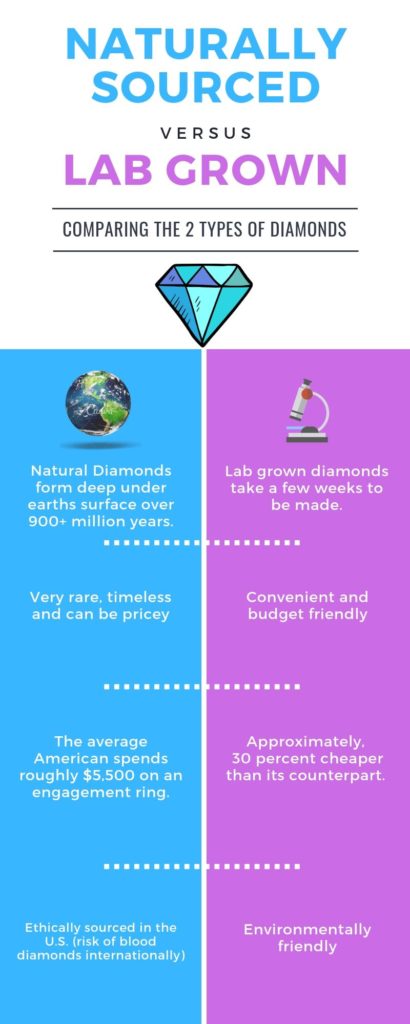
In other words, natural or earth-mined diamonds are crafted over countless years below the Earth's crust from pure carbon incorporated with pressure and warm. Producing rubies in a laboratory needs the exact same process, just fine-tuned to take place over a much smaller time frame in a much extra regulated setup.
Whereas earth-mined diamonds are uncommon and finite and have a tendency to enhance in cost over time, lab diamonds are readily available. As demand rises, labs can continue to generate lab diamonds indicating they are not limited or limited compared to natural rubies. If you're interested in great jewelry from a financial investment perspective, like lab-grown diamond rings, they will not be a great suitable for your needs.
They could believe that the cons of lab-grown rubies outweigh the pros. Conflicts, battles, and human rights issues are all come together with the diamond market. That said, the ruby industry does supply revenue to third-world countries. Some may argue that, consequently, acquiring a lab-made diamond additionally comes with its ethical factors to consider, as doing so takes revenue far from those associated with the natural ruby sector that might need it most.
Typical rubies depend on the Planet's conditions to determine their high quality or absence thereof. In a laboratory, suppliers can straight regulate a diamond's high quality.
The Main Principles Of Lab Grown Diamonds
You can quickly locate tinted, synthetic diamonds on the (fairly) low-cost side as well as details cuts that would be costlier if you were check here shopping for an extracted ruby only. That hardly suggests it isn't worth shielding.
natural diamonds is that the latter is mined from natural down payments in the Planet while the previous is made in a laboratory utilizing regulated setups. However their high quality is greatly the very same. Lab Grown Diamonds. While the distinction in between lab-grown and all-natural diamond options are minimal when it concerns top quality, a few of the downsides of lab-grown rubies consist of the truth that the stone will drop gradually and, to some, an absence of emotional worth that's usually connected with mined diamonds
This cost distinction can be attributed to the structured manufacturing procedure and the avoidance of expenditures linked with typical mining. The Controlled Atmosphere in Which Laboratory Grown Diamonds Are Created Enables for Regular Quality.
Versatility in Layout - Lab Grown Diamonds Offer Designers and Customers a Versatile Scheme to Develop Special and Cutting-edge Jewelry Designs - Lab Grown Diamonds. Laboratory Rubies Commonly Come with A More Clear Supply Chain.
The Facts About Lab Grown Diamonds Uncovered
Market Understanding - In Spite Of Their Similar Physical Qualities, Lab Diamonds Might Face Tests in Market Perception. Some Consumers Still Perceive Natural Diamonds as Having Greater Value and Prestige. The Manufacturing of Lab-Grown Diamonds Can Be Energy-Intensive, Especially in Approaches Like High Stress High Temperature (hpht) and Chemical Vapor Deposition (cvd).
All-natural Rubies Are Developed Over Numerous Years Deep Within the Earth, Adding To Their Viewed Rarity. Lab-Grown Rubies, In Spite Of Their The Same Quality, Might Not Bring the Exact Same Rarity Element, Affecting Their Regarded Worth for Some Customers. Influence On Diamond-Dependent Economies - the Shift In The Direction Of Lab Grown Diamonds May Have Economic Ramifications for Countries and Areas that Depend on The Diamond Mining Industry.
Laboratory Rubies Are of Equal Quality to Natural Diamonds in Terms of Hardness, Luster, and Clarity - Lab Grown Diamonds. Yes, Laboratory Diamonds Glimmer Simply Like All-natural Diamonds. Their Sparkle and Sparkle Are a Result of Their Cut and The Means Light Interacts with Their Aspects.